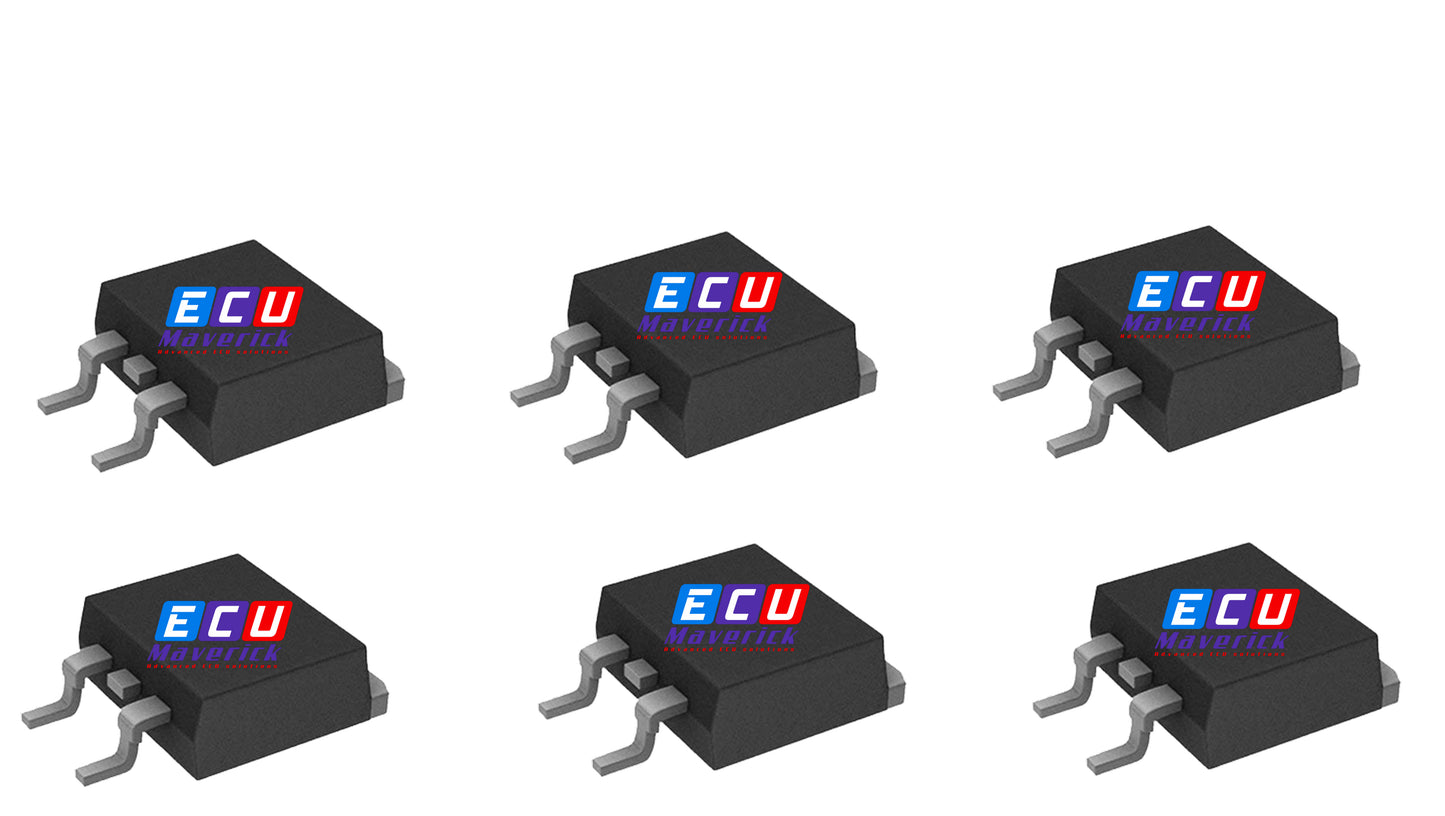
BMW N54 MSD80 DME Repair MOSFETs (Set of 6) - OEM FDB14N30TM Replacement for 335i, 135i, 535i
BMW N54 MSD80 DME Repair MOSFETs (Set of 6) - OEM FDB14N30TM Replacement for 335i, 135i, 535i
Couldn't load pickup availability
Product Title
BMW N54 MSD80 DME Repair MOSFETs (Set of 6) - OEM FDB14N30TM Replacement for 335i, 135i, 535i
Product Description
Restore your N54 engine performance with genuine, high-reliability MOSFETs. A common failure point in the BMW MSD80 Engine Control Unit (DME) is the failure of the ignition transistors (MOSFETs), leading to permanent misfires and "limp mode." This kit includes a complete set of six (6) genuine FDB14N30TM MOSFETs, specifically rated at 300V to meet or exceed OEM specifications.
Why Choose Our Kit?
-
100% Authentic Components: Avoid the "cheap" counterfeits common on third-party marketplaces that can lead to permanent DME board damage. We source directly from the manufacturer.
-
Complete Set: Includes all 6 MOSFETs required for both Bank 1 and Bank 2.
-
Exact Fitment: Designed specifically for the MSD80 DME found in N54-equipped vehicles.
Symptoms of MOSFET Failure
If your BMW is experiencing the following, your DME likely requires these replacements:
-
Fault Codes: 30BA (Bank 1 Failure) or 30BB (Bank 2 Failure).
-
Driveability: Engine running on only 3 cylinders, severe shaking, stalling, or a "No Start" condition.
-
Warning Lights: Engine malfunction/Check Engine Light (CEL) and Limp Mode.
Vehicle Compatibility
Engine: N54 Twin-Turbo 3.0L DME Type: MSD80 Only (Will not fit MSD81 or other variants)
| Model | Chassis | Years |
| 135i | E82 / E88 | 2007–2010 |
| 335i / 335xi | E90 / E91 / E92 / E93 | 2007–2010 |
| 535i / 535xi | E60 / E61 | 2008–2010 |
| X6 xDrive35i | E71 | 2008–2010 |
| Z4 sDrive35i | E89 | 2009–2010 |
Technical Specifications
-
Part Number: FDB14N30TM
-
Package: TO-263 (D2PAK)
-
Voltage Rating: 300V
-
Current Rating: 14A
-
Quantity: 6 Pieces
Note: Installation requires advanced soldering skills. It is recommended to replace all 6 MOSFETs simultaneously to prevent future bank failures.